

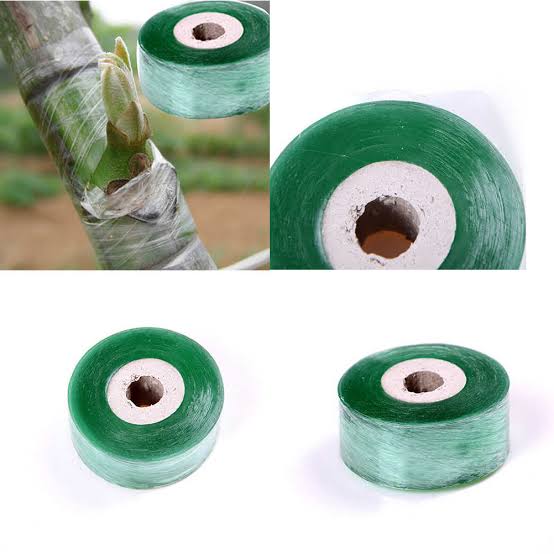
Key benefits of grafting tape:
- Secures the union: The tape holds the cut surfaces of the scion and rootstock firmly together, ensuring tight contact between their vascular cambium layers, which is essential for successful fusion.
- Prevents moisture loss (desiccation): Grafting tape acts as a waterproof barrier that seals the “open wound,” preventing the delicate plant tissues from drying out before the vascular systems connect.
- Protects from elements and pests: It shields the vulnerable graft site from rain, air, wind, and potential pathogens or insects that could cause infection or damage.
- Accommodates plant growth: Quality grafting tapes are stretchable and flexible, expanding as the stem grows. This prevents the tape from “girdling” (choking) the plant, a common problem with regular, non-elastic tapes.
- Self-adhesive properties: Many types of grafting tape cling to themselves when stretched, allowing for quick and easy application without the need for complex knots or sticky glues that could harm the plant tissue.
- Allows for gas exchange: While keeping water out, good quality tapes (like Parafilm or Buddy Tape) are often permeable to air, allowing the plant to “breathe” and the bud to grow through the tape itself in some cases.
- Biodegradable options: Some modern tapes are designed to break down naturally with exposure to sunlight over a few weeks or months. This eliminates the labor-intensive need for manual removal after the graft has healed.
- Ease of monitoring: Many grafting tapes are clear or translucent, which allows gardeners to visually monitor the development and healing of the graft union without disturbing the tape.

Reviews
There are no reviews yet